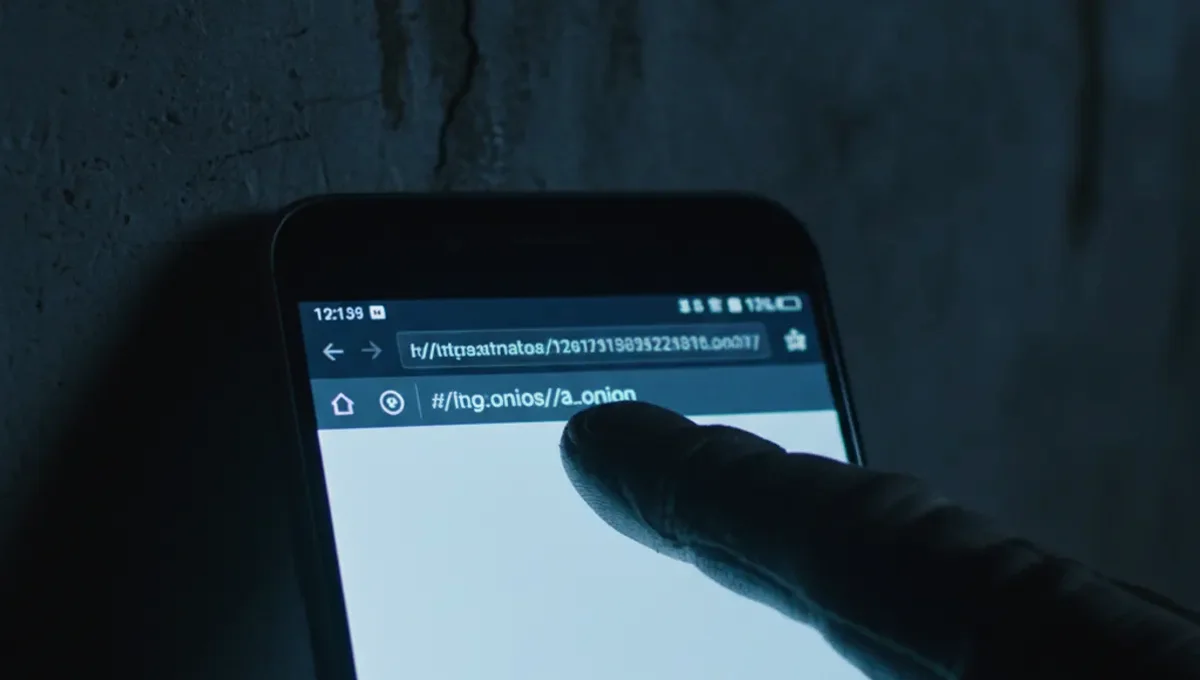
What Dark Website .com Actually Refers To
A dark website .com is a regular internet domain hosted on the clearnet, not on the Tor network. These sites typically fall into three categories: clearnet mirrors operated by darknet communities to reach users without Tor, phishing clones designed to steal login credentials, or informational sites about the dark web itself.
The confusion arises because people conflate the dark web with any site that discusses illegal activity or appears to be anonymous. In reality, the dark web is a technical layer accessed through Tor, I2P or similar networks, and it uses .onion addresses. A .com domain, no matter what content it hosts, is indexed by search engines and accessible from any browser. This means it offers no anonymity to visitors and is subject to standard law enforcement and domain seizure.
Legitimate Clearnet Mirrors and Why They Exist
Some darknet communities operate official clearnet mirrors to provide access to users who cannot or will not use Tor. These mirrors typically host the same forum or marketplace content as the onion version, but without the anonymity layer. A legitimate mirror is usually announced on the official onion site via PGP-signed posts, and the domain is controlled by the same administrators.
The purpose of a mirror is convenience, not security. Users who access a clearnet mirror are fully visible to their ISP and any network observer. Law enforcement has used clearnet mirrors as entry points to identify and prosecute users. If you use a dark website .com mirror, assume your activity is logged and potentially monitored. Always verify that a clearnet mirror is officially endorsed by checking the PGP signature on the onion site's announcement section.
How Phishing Clones Exploit the .com Confusion
Scammers register .com domains that mimic the names of popular darknet forums and marketplaces, then use them to phish credentials from users. A user searching for a dark website hack or dark website hacker might land on a fake site that looks identical to the real one, enter their username and password, and lose access to their account and any funds held there.
Phishing clones succeed because they exploit two vulnerabilities: the searcher's unfamiliarity with onion addresses and the difficulty of distinguishing a fake site from a real one at first glance. The attacker may even use HTTPS and a professional design. The only reliable way to verify a site is to access it through the official onion address, check the PGP-signed announcement, or contact the administrators through verified channels. Never assume a .com domain is legitimate just because it appears in search results or looks professional.
The Role of Dark Website Chrome and Browser Access
Users often search for dark website chrome or similar queries because they want to access darknet sites from their regular browser. This is a common misconception. Chrome, Firefox and other standard browsers cannot access .onion addresses without additional software. The Tor Browser is the recommended tool, and it is based on Firefox with Tor integration built in.
Some people attempt to use VPNs or proxy extensions to access dark websites, but these do not provide the same anonymity as Tor. A VPN only encrypts traffic between your device and the VPN server; it does not hide your IP from the destination site. The Tor Browser routes your traffic through multiple relays and uses onion routing to obscure your origin. If you want to access a legitimate onion site, download the Tor Browser from the official Tor Project website, not from a third-party source.
Dark Website Examples and How to Verify Them
When you encounter dark website examples online, most are either outdated references to seized marketplaces, fictional descriptions, or phishing sites. A real onion address looks like a long string of random characters followed by .onion, for example: thehiddenwiki[...].onion. It is not a .com, .net or any standard TLD.
To verify whether an example is real, check the Useful Resources page of this site for links to verified directories and PGP-signed announcements. Never click a link from a search result or a forum post without confirming it through an official channel. If you are researching a specific marketplace or forum for security awareness, look for archived court documents, law-enforcement press releases, or academic papers that document how it operated. These sources are more reliable than any .com site claiming to be a mirror or guide.
Reality Check: How the Ecosystem Actually Works
The Tor Project documentation confirms that .onion addresses are generated by Tor and are not registered through traditional domain registrars. This matters because it means any .com claiming to be a dark website is either a clearnet mirror, a phishing clone, or a site about the dark web, not an actual onion service.
Public law-enforcement press releases and court records show that phishing clones and fake mirrors are a persistent threat. Users who lose credentials or funds to these sites often have no recourse because the attacker is anonymous and the site may be hosted in a jurisdiction with weak cybercrime enforcement. Security-vendor incident reports document how phishing campaigns target users searching for dark website examples or dark website hack tutorials. The lesson is simple: if you cannot verify a site through an official PGP-signed announcement or a trusted directory, do not enter credentials or send funds.
What You Should Do Today
If you have been searching for dark website .com addresses, stop. Instead, use the Tor Browser to access verified onion directories and forums. If you are researching the dark web for security awareness or academic purposes, rely on archived court documents, law-enforcement announcements, and published security research rather than active sites.
If you have already entered credentials into a dark website .com that you thought was legitimate, change your password immediately on the real onion site and enable two-factor authentication if available. Monitor your accounts for unauthorized access. Do not assume that because a site looked professional or appeared in search results that it was real. The only way to verify an onion site is to access it through the official .onion address, check PGP signatures, and cross-reference with trusted community announcements.
Frequently Asked
Is dark website .com the same as a .onion address?
No. A .com domain is a standard internet address hosted on the clearnet and accessible from any browser. A .onion address is generated by Tor and can only be accessed through the Tor Browser or similar software. If a site uses a .com domain, it is not an actual onion service, even if it claims to be a mirror or guide to the dark web.
How do I know if a dark website .com is a phishing clone?
Phishing clones are difficult to spot visually. The safest approach is to never access a dark website through a .com link. Instead, use the official .onion address verified through PGP-signed announcements on the real site. If you cannot find a PGP-signed announcement, the site may not be legitimate. Check the Useful Resources page of this site for verified directories.
Can I access dark websites from Chrome or Firefox without Tor?
No. Standard browsers cannot access .onion addresses. You must use the Tor Browser, which is based on Firefox and includes Tor integration. VPNs and proxy extensions do not provide the same anonymity and will not allow you to access onion sites. Download the Tor Browser only from the official Tor Project website.
What should I do if I entered my password into a dark website .com?
Change your password immediately on the real onion site and enable two-factor authentication if available. Monitor your accounts for unauthorized access. Do not use the same password on other sites. If you sent funds, contact the site administrators through verified channels and report the phishing clone to the Tor Project or relevant authorities.
Are clearnet mirrors of dark websites safe to use?
Clearnet mirrors offer no anonymity. Your ISP and network observers can see your activity. Law enforcement has used clearnet mirrors to identify and prosecute users. Only use an official mirror if it is PGP-signed by the site administrators, and understand that you are fully visible to your ISP.